
World Cup 2026 Explainer
How World Cup qualification works
A clear overview of how national teams reach the expanded 48-team World Cup and why qualification differs by confederation.
5 min read
Qualification is regional first
World Cup qualification is organized by confederation. Each region runs its own competition, usually over many international windows, to decide which national teams earn direct places and which reach inter-confederation playoffs.
The expanded 48-team format gives more places, but it does not make every region identical. Europe, South America, Africa, Asia, Concacaf, and Oceania still use different formats shaped by geography and calendar constraints.
- Each confederation manages its own qualifying route.
- Some teams qualify directly; others need playoff rounds.
- Qualification formats can change between World Cup cycles.
Hosts and direct places
Host nations are handled separately from normal qualifying because they are guaranteed entry. For 2026, the tournament is hosted across the United States, Canada, and Mexico.
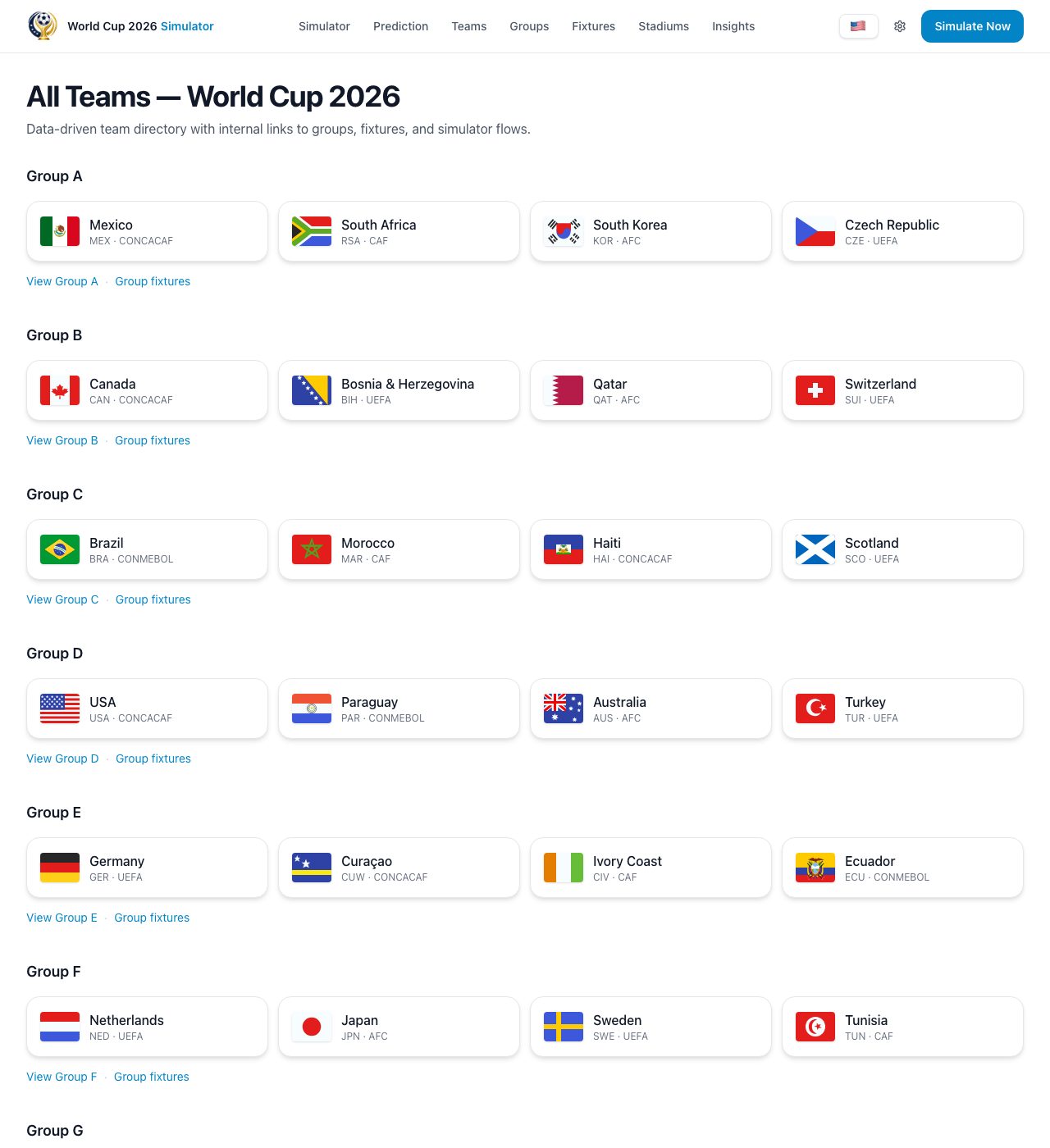
Once the field is known, teams are assigned to groups. The simulator uses the generated tournament dataset as its source of truth, so team pages, fixtures, groups, and prediction flows stay aligned.
Why qualification matters in the simulator
Qualification context helps explain team expectations. A team that dominated its region may carry different assumptions than a team that reached the tournament through a playoff.
As the dataset grows, those signals can feed richer insight pages: team paths, matchup notes, recent form, and community prediction trends.
Create a new prediction
Your World Cup 2026 bracket prediction.